AKRON, OH, Feb. 03, 2026 (GLOBE NEWSWIRE) -- Disclaimer: This article is for informational purposes only. It is not medical advice. Body composition and wellness concerns should be evaluated by a qualified healthcare professional. This content does not diagnose, treat, cure, or prevent any disease. The product discussed is not a medical device and is not intended for medical diagnosis or treatment. If you purchase through links in this article, a commission may be earned at no additional cost to you.
This release is an informational overview of publicly available disclosures for Herz P1 Smart Scale and broader consumer research behavior within the consumer body composition tracking devices category. Nothing in this content should be interpreted as medical advice, a product endorsement, or a performance claim.
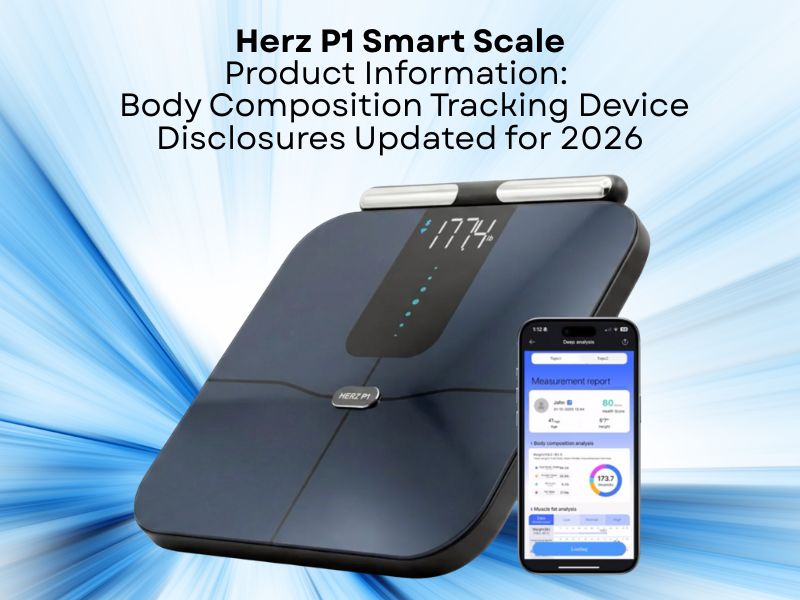
As more people look for ways to track body composition at home heading into 2026, updated product disclosures for Herz P1 Smart Scale have recently become publicly available. If you're researching what's out there beyond standard bathroom scales, detailed information about this multi-metric tracking device is now accessible for anyone trying to better understand their options.
This article provides informational context about the body composition tracking category and summarizes what Herz P1 has disclosed about its product. Readers seeking primary-source detail can view the current Herz P1 Smart Scale offer (official Herz P1 page) to review the company's complete product disclosures directly. This article does not assess product effectiveness or outcomes and focuses solely on publicly available disclosures.
Why People Are Looking Beyond Standard Bathroom Scales
If you've ever stepped on a bathroom scale and wondered what that number actually means, you're not alone. Standard scales give you one piece of information—total body weight—but they don't tell you how much of that weight is muscle, fat, water, or bone. That's why interest in home body composition analysis technology has been growing as people look for devices that break down the details.
Maybe you're working out consistently but the scale isn't budging, and you're wondering if you're actually building muscle while losing fat. Or perhaps you want to track water retention patterns, understand where fat is distributed in your body, or see how your metabolism is trending over time. These are the questions that drive people to research body composition tracking devices that use bioelectrical impedance analysis (BIA) or similar technologies to estimate how body weight is distributed across different tissue types.
If you're considering whether body composition tracking fits your wellness approach, many people choose to consult qualified healthcare professionals for personalized guidance on what factors might be worth monitoring for their individual circumstances.
What You're Actually Looking At When You Research Body Composition Devices
When people talk about consumer body composition tracking devices, they're usually referring to home-use scales and analyzers that employ bioelectrical impedance analysis (BIA) technology. Here's the basic idea: these devices send tiny, safe electrical signals through your body and measure how those signals interact with different types of tissue. Fat, muscle, water, and bone all conduct electricity differently, and the device uses these resistance patterns to estimate your body composition.
You'll see these devices in different formats—some are standard platform scales with foot electrodes only, others are handheld analyzers with grip sensors, and some (like the one we're discussing here) use both hand and foot contact points with multiple electrodes. The technical specifications vary quite a bit across brands, which is why people often compare electrode count, measurement frequency, and how many metrics each device actually tracks.
These home devices are different from the professional body composition analyzers you might encounter at a doctor's office, gym, or research facility, which may use completely different measurement technologies like DEXA scanning, air displacement, or hydrostatic weighing. If you're trying to decide whether tracking body composition at home makes sense for you, many people find it helpful to discuss the approach with a qualified healthcare professional who can provide personalized guidance.
Understanding the Difference: Wellness Devices vs. Medical Devices
Here's something worth knowing if you're researching body composition devices: there's a regulatory difference between products marketed for general wellness purposes and products intended for medical diagnosis or treatment. The FDA regulates these categories differently based on what claims the manufacturer makes about what their product does.
Body composition scales marketed for fitness tracking, wellness monitoring, or helping you understand your body composition trends typically fall into the wellness category. They don't go through the same pre-market approval process that medical diagnostic devices require because they're not intended to diagnose or treat medical conditions—they're designed to give you information you can use to track your progress and make informed decisions about your wellness approach.
This regulatory distinction is why you'll see disclaimers on these products stating they're "not intended to diagnose, treat, cure, or prevent any disease." It's also important context when comparing home devices to professional equipment used in medical or clinical settings, which may have different regulatory classifications based on their intended use. If you have specific health concerns or medical conditions you're monitoring, it's worth discussing with a qualified healthcare professional whether body composition tracking fits into your care plan and how to interpret the data meaningfully.
How Different Devices Measure Your Body: The Electrode Count Factor
Not all body composition devices measure the same way, and understanding the difference can help you make sense of what you're comparing. Most standard bathroom scales use 4 electrodes positioned under your feet. When you step on, electrical signals travel up one leg, across your lower body, and down the other leg. The device then uses mathematical formulas to estimate what your upper body composition might be based on that lower body data combined with your age, height, and gender.
Some devices take a different approach with 8 electrodes—four under your feet and four more in handheld contact points. This setup lets the device measure your upper body and lower body separately by completing multiple electrical circuits through different body segments. According to manufacturers, this dual-pathway method can provide more detailed segmental analysis because it's actually measuring each area rather than estimating based on one pathway.
If you've seen professional body composition analyzers at a gym or medical clinic, they often use similar bioelectrical impedance principles but may employ different frequency ranges, calibration protocols, or multi-segment analysis approaches. When people research home devices, they often compare these technical specifications to professional equipment to get a sense of the measurement approach and potential accuracy range.
What to Look For When You're Comparing Options
If you're trying to decide between different body composition devices, here are some factors people often compare that have nothing to do with whether a product "works" or not—they're just practical considerations about transparency, features, and support:
Technology specifications—How many electrodes does the device use? What measurement frequencies does it employ? Does the company actually explain how body composition estimates are calculated, or is it just marketing fluff?
Metric breadth—How many different body composition metrics does the device measure and display? Are you getting just the basics (weight, body fat, muscle) or more detailed segmental analysis?
Connectivity and data access—Does the device sync with health tracking apps you already use? More importantly, are there subscription fees to access your own data, or is everything included?
Measurement capacity and accuracy specifications—What's the weight limit? What accuracy claims or comparative statements does the company make, and do they back them up with testing methodology?
Customer service and return policies—If you're not satisfied or have questions, does the company provide clear contact information and reasonable return windows?
These are informational considerations, not performance evaluations. What matters most depends entirely on what you're trying to accomplish with body composition tracking.
What Herz P1 Actually Tells You About Their Smart Scale
According to its official product page, Herz P1 Smart Scale is designed for people who want more than just a weight number when they step on a scale. The company describes it as an 8-electrode device that uses dual-frequency bioelectrical impedance analysis (BIA) with both foot and hand contact points—there's a retractable handle you pull up during measurement to create the upper body circuit.
According to the company, the Herz P1 Smart Scale provides multi-metric body composition estimates through an 8-electrode, dual-frequency BIA approach using both foot and hand contact points. The company states the device displays 56 metrics in its companion app, including body fat percentage, muscle-related estimates, body water estimates, and segmental readings by limb and trunk. The company states the device can record resting heart rate during measurement sessions for general wellness tracking and trend awareness, and it is not intended for medical diagnosis.
According to the company, the Herz P1 is designed for consumer wellness tracking purposes using measurement approaches that the company references in relation to professional body composition analyzers. The company states that internal testing showed measurement correlation—described on its website as "up to 97%"—when compared with professional body composition analyzers such as InBody devices. The company does not cite independent, peer-reviewed validation for this statement, and results may vary by individual and measurement conditions.
If you don't want to pull out your phone every time you weigh yourself, the company states the scale features an extra-large 76mm LED display that shows your key metrics immediately on the device itself. The platform is built with 6mm tempered glass and supports up to 400 pounds (180 kg), measuring in 0.1-pound increments. Power comes from 4 AAA batteries, and the device connects via Bluetooth to the Unique Health companion app for both iOS and Android.
The company states that app access and metric history are available without a recurring subscription fee, and that users can view trend data and export reports through the companion app. Herz P1 states the app syncs with Apple Health, Google Fit, Fitbit, and Samsung Health platforms and supports up to 24 individual user profiles with automatic user recognition.
If you want to see everything the company discloses about this device, you can view the current Herz P1 Smart Scale offer (official Herz P1 page) for complete technical specifications and current availability.
Making Sense of Accuracy Claims You'll See on Product Websites
If you're shopping for a body composition device, you'll probably notice that many brands mention accuracy percentages or compare themselves to professional equipment. It's worth understanding what those statements actually mean before you make a decision.
When a company says their device has "97% correlation" or "matches professional analyzers," they're usually describing their own internal testing protocols—how they compared their device to professional equipment in their own studies. These statements typically aren't based on independent, peer-reviewed research published in scientific journals. That doesn't necessarily mean the claims are wrong, but it does mean the company is characterizing their own product's performance rather than pointing to outside validation.
If accuracy matters to you (and for most people tracking body composition, it does), look for details about how the testing was done, what reference standard was used for comparison, and whether any independent validation data is publicly available. Many people also find it helpful to discuss with a healthcare professional what level of measurement precision actually matters for their individual wellness goals—sometimes higher levels of measurement precision are required, depending on the context.
Refund Policies and Customer Support Disclosures
The company publishes customer service contact information and its return policy terms on the official website, where readers can review the current conditions and limitations. According to the company's website, return policy terms include a time-limited window (for example, a 90-day period), subject to the published conditions and limitations.
Where to Find the Complete Technical Details
If you want to dig deeper into the technical specifications, see the full list of all 56 metrics, check current pricing, or review the company's measurement methodology in detail, all of that information is published on Herz P1's official website.
You can view the current Herz P1 Smart Scale offer (official Herz P1 page) to review everything the company discloses about how the device works, what it measures, and what's included with your purchase.
Contact Information
Herz P1 LLC
839 E Market St, Ste 106 #165
Akron, OH 44305
United States
Email: support@herzp1.com
Phone: (877) 309-3614
About Herz P1
Herz P1 is a consumer health technology company that offers body composition tracking devices within the home wellness monitoring category. According to the company, its products use 8-electrode dual-frequency bioelectrical impedance analysis technology and provide access to comprehensive body composition metrics without subscription fees. Additional details about the company and its product line are available on its official website.
Disclaimer: This content is for informational purposes only and does not constitute medical advice. Body composition and wellness concerns should always be evaluated by a qualified healthcare professional. This article does not diagnose, treat, cure, or prevent any disease. The product discussed is not a medical device and is not intended for medical diagnosis or treatment.
Affiliate Disclosure: This content may contain affiliate links. If you purchase through links in this article, a commission may be earned at no additional cost to you. This does not influence the informational content provided.
Product and Pricing Disclaimer: Product availability, pricing, and promotional offers are determined solely by the manufacturer and may change without notice. Verify all details on the official product page before making any purchase decisions.
Publisher Responsibility Disclaimer: The publisher of this content is not the manufacturer of the product discussed and makes no independent claims about product performance. All product-specific information is attributed to publicly available company disclosures.

Email: support@herzp1.com Phone: (877) 309-3614